Para los que no lo vieron en septiembre, ya salió publicado el texto final aprobado en el Congreso Nacional de Honduras:
http://www.tsc.gob.hn/biblioteca/index.php/leyes/503-ley-organica-de-las-zonas-de-empleo-y-desarrollo-economico-zede
- - - - - - - - - -
The ZEDE Organic Law was published on September after final approval from Honduras National Congress. For the curious I made a rough translation, with changes from the draft highlighted:
http://piratepad.net/ep/pad/view/ro.a85L1-B2Rju/latest
jueves, 31 de octubre de 2013


domingo, 27 de octubre de 2013
Conservadurismo inconsciente

Cada vez que hablo de marcharme a las Ciudades Libres, alguien se adelanta a declararme loco. Que si me voy a dar un batacazo, que de dónde he sacado esas ideas, ya te digo yo que volverás.
La gente que me dice estas cosas nunca se ha dado un batacazo ni se ha arriestado a hacer algo que parecía alocado. Muchos se etiquetan de progresistas, alguno de conservador. En realidad suele ser gente que nunca ha cambiado de ideas. Conozco a algunos que llevan pensando igual, viendo el mundo igual, desde la adolescencia o la infancia. Alguno ha evolucionado un poco, pero nunca se han replanteado las bases de su forma de ver el mundo.
Tienen miedo. Miedo a equivocarse. Nunca dudan de sí mismos, y por eso es casi imposible convencerlos por mucho que se argumente, por muy equivocados que estén. Nunca se han preguntado si sus ideas son correctas. Miedo al fracaso y miedo a lo desconocido, ausencia de curiosidad.
Yo no puedo evitar darle vueltas a mis ideas, ponerlas a prueba, lanzarme a lo desconocido, fracasar. Al principio, lo reconozco, también me daba miedo, pero con el tiempo he aprendido a valorar mis fracasos, y a dejar de termerlos.
Esa gente que nunca ha dudado de sus pensamientos, que nunca se ha arriesgado ni se han equivocado estrepitosamente, no tienen curiosidad por el mundo que les rodea, por la verdad, que ven la vida como un camino recto sin desvíos, y más cada año que pasa; esa gente, son conservadores y no lo saben.
- - - - - - - - - -
Each time I speak about leaving for Free Cities, someone jumps to call me crazy. They say I'm going to come to a cropper, where'd you got those ideas, you'll come back.
People telling me those things has never come to a cropper neither risked doing something seemingly crazy. A lot of them label themselves as progresist, some as conservative. Actually use to be people whose ideas never changed. I know some that have been thinking the same, watching the world equally, from teens or even childhood. A few have evolved a bit, but have never rethought their world view basis.
They're afraid. Afraid of making mistakes. They never doubt themselves, and so it's almost impossible to convince them for much thath you argue, for so wrong they may be. They never wondered if their ideas are correct. Afraid of failure and afraid of the unknown, curiosity absent.
I can't help to brood over my ideas, test them, leap on the unknown, fail. At first, I admit, I was too afraid, but with time I've learned to appraise my failures, and to stop fearing them.
That people who never doubted their thoughts, who never risked or failed noisily, not curious about the world around them, about truth, who see the life as a straight way without detours, and more each year passes; that people, they're conservative and they don't know.
viernes, 20 de septiembre de 2013
Cuba firma su primera Zona Especial
Update: here in English http://blog.panampost.com/fergus-hodgson/2013/09/20/special-development-region-coming-to-cuba/
http://www.martinoticias.com/content/article/27684.html
http://www.martinoticias.com/content/article/27684.html
"la creación de Zonas Especiales de Desarrollo que permitan incrementar la exportación, la sustitución efectiva de importaciones, los proyectos de alta tecnología y de desarrollo local; así como contribuir a generar nuevas fuentes de empleo". “Según se precisó en la reunión, en dicha Zona se pondrán en práctica políticas especiales, con el objetivo de fomentar el desarrollo económico sostenible estimulando la inversión extranjera y nacional, la innovación tecnológica y la concentración industrial”.El área elegida es el puerto de Mariel, al oeste de la isla (45km de La Habana). La idea es seguir el modelo chino de las SEZ, pero más acelerado. Veremos hasta dónde pueden llegar con el embargo de EEUU encima, pero ojalá podamos darles la bienvenida al mundo capitalista a los cubanos.
jueves, 19 de septiembre de 2013
Free Cities sprouting

Read in English
Hong Kong, Singapur y las ZEEs chinas están dando ejemplo al mundo (y también Dubai y Abu Dhabi al mundo islámico).
Hay varios movimientos alrededor del mundo abogando por las Ciudades Libres/Ciudades Charter como solución para un montón de problemas, en algunos países incluso desde el gobierno. Ya no es solo cosa de libertad económica; hay necesidad y demanda de reglas más relajadas.
Empezando por la propia China, Shanghai podría convertirse en una gran Zona Económica Especial, combinando varias que ya están presentes en la ciudad, con la particularidad de que además permitiría por primera vez el intercambio libre de divisas, especialmente del Yuan, y probablemente también serviría como laboratorio de liberalización económica en otros ámbitos.
En Japón, el presidente Shinzo Abe ha propuesto también crear zonas especiales con regulación más relajada como paliativo a la crisis crónica del país. En principio el buen hombre había pensado en el cinturón Tokio/Nagoya/osaka, más la isla de Hokkaido, pero teniendo en cuenta de que abarca casi la mitad de la población del país, es de imaginar que al final probarán con algo más pequeño.
Y de vuelta a Norteamérica, un par de ideas curiosas, aunque no me imagino el alcance que tendrán ahora mismo.
En Canadá ha aparecido la propuesta de convertir Montreal en una Ciudad Charter, integrada dentro del país pero con sus propias normas para fomentar el desarrollo económico. Entre sus influencias figura Paul Romer.
En Puerto Rico, hundido en una crisis económica tremenda, hay voces pidiendo la independencia total de los EEUU desde hace tiempo, pero ahora ha aparecido la idea de construir Ciudades Libres, o por lo menos en una parte de la isla.
Hay muchos ejemplos de ZEEs desarrollándose en el mundo, pero muy pocos tienen el carácter de Ciudad Libre, con legislación independiente y, hasta cierto punto, más liberal.
- - - - - - - - - -

There are several movements around the world advocating for Free Cities/Charter Cities as a solution for a lot of problems, in some countries even from government. It is not only about economic freedom; there is a need and demand for looser rules.
Starting with China itself, Shanghai could become a great Special Economic Zone, melting a few that are already present in the city, featuring for first time free monetary exchange, specially for the Yuan, and probably could also serve as liberalization lab in other fields.
In Japan, president Shizno Abe proposed too to create special zones with looser regulation as palliative for the country chronic crisis. As a start, the good man had thought on the Tokio/Nagoya/Osaka belt, plus the Hokkaido island, but taking into account that is almost half the country population, one can guess that at the end they'll try with something smaller.
And back to North America, a pair of curious ideas, while I can't guess the scope they have right now.
In Canada has appeared the proposal of making Montreal a Free City, integrated in the country but with its own rules to encourage economic development. Among their influences there is Paul Romer.
In Puerto Rico, sunk in awful economic crisis, there are voices claiming total independence from the USA since long, but now has appeared the idea of building Free Cities, or at least in a part of the island.
There are a lot of SEZ samples developing in the world, but very little have the character of Free City, with independent legislation and, to some degree, more freedom.
sábado, 14 de septiembre de 2013
Hardships of making business in Honduras
This is why developing countries need Free Cities for: so people with good ideas and little resources can enter formal markets under the same conditions as rich people.
http://www.latribuna.hn/2013/09/13/el-largo-camino-para-legalizar-una-mipyme/
Why honduran business can't satisfy the great food demand? There are several answers.
Still, a reason is related with the amount of legal obstacles business have to face for their product to comply with the required requests of the formal markets.
From beekeepers that want to pack their honey to entrepreneur women who process foodstuff, there is a strong clamor about how bothersome is the process.
Albertina García, representative of small business for region 14 (río Lempa) said that "we have difficulties to comply with such a big legal package, so strict and so expensive".
The small business sector demands an agile process, low cost and avaiability of low interest credits.
"In Macala a lot of small business have been swindled by lawyers that answered for ten or twenty thousand lempiras and made no procedures; others make it endless or blame the government", said García.
Actually this could apply also for some developed countries.

jueves, 12 de septiembre de 2013
Enlaces y otras noticias
Llevo bastantes días sin actualizar. Las cosas en agosto no se han movido muy rápido, pero se han movido.

- - - -
Paul Romer lanza su Urbanization Project, una recreación de las Charter Cities pero ahora con un acercamiento mucho más pro-startup:
"A charter city is a type of civic startup, a framework for reform. Civic startups allow societies to experiment with new rules, but to do so in ways that do not force change on those who don’t want it."
- - - -
He estado involucrándome con el Road and Vehicles Trust, una buena idea de Graham Brown para gestionar infraestructuras de forma privada.
"The goal is to provide roads as a product. It will not be anything like a government department, with mixed incentives and a politically guided budget. Its financial future will lay in providing roads that make people's lives better. So it will have a doctrine aligned with a constant incentive; to make people's experience of using the roads a good one, with quick journeys that are safe, quiet and clean."
- - - -
La ley orgánica de las ZEDE por fin está publicada en La Gaceta, así que ya es oficial. Cuando tenga un enlace lo pondré aquí.
"A link to the Voice and Exit Facebook page, for Facebookers. Bell included a link to what is said to be the official Honduran publication of the law, which Bell says two Honduran sources have verified did happen."
Y eso es lo que hay por ahora. Cuando tenga una traducción al inglés también la pondré por aquí.
- - - -
Paul Romer lanza su Urbanization Project, una recreación de las Charter Cities pero ahora con un acercamiento mucho más pro-startup:
"A charter city is a type of civic startup, a framework for reform. Civic startups allow societies to experiment with new rules, but to do so in ways that do not force change on those who don’t want it."
- - - -
He estado involucrándome con el Road and Vehicles Trust, una buena idea de Graham Brown para gestionar infraestructuras de forma privada.
"The goal is to provide roads as a product. It will not be anything like a government department, with mixed incentives and a politically guided budget. Its financial future will lay in providing roads that make people's lives better. So it will have a doctrine aligned with a constant incentive; to make people's experience of using the roads a good one, with quick journeys that are safe, quiet and clean."
- - - -
La ley orgánica de las ZEDE por fin está publicada en La Gaceta, así que ya es oficial. Cuando tenga un enlace lo pondré aquí.
"A link to the Voice and Exit Facebook page, for Facebookers. Bell included a link to what is said to be the official Honduran publication of the law, which Bell says two Honduran sources have verified did happen."
Y eso es lo que hay por ahora. Cuando tenga una traducción al inglés también la pondré por aquí.
martes, 27 de agosto de 2013
Free Cities Gone Bad
La idea de las Ciudades Libres que conocemos hoy empezó a andar en los años 60 en EEUU, cuando algunos libertarios decidieron buscar refugio en aguas internacionales, fuera de la jurisdicción de cualquier gobierno. Son los pioneros de las Ciudades Libres. Aquí una lista:
Operation Atlantis - Raising a Reef

Hacia finales de los 60, un empresario de Nueva York llamado Werner Stiefel empezó a reunir gente con la idea de construir un refugio libertario flotante en el Caribe. Consiguieron construir un barco/plataforma y, con grandes dificultades, anclarlo cerca de las Bahamas. El barco se hundió en una tormenta.
Pero siguió sin rendirse y, poco después, ya estaba dragando arena para construir una isla sobre un arrecife cerca de Haití, con la suerte de que en ese arrecife solían encallar galeones españoles cargados de plata. Mala suerte, pues el gobierno de Haití se enteró y se interesó por la recuperación de la plata, enviando barcos de guerra para expulsar a aquellas extrañas personas.
El siguiente intento consistió en remolcar una plataforma petrolífera hasta los bancos de arena Misteriosa, a medio camino entre Cuba y Honduras. También la destruyó una tormenta.
Al final compró una isla en Belize con la intención de negociar con el gobierno un estatus especial. La burocracia era tan asfixiante que decidió vender la isla y retirarse, ya avanzado en edad. Murió el 8 de junio de 2006 a los 85 años de edad.
Towards the end of the 60's, a New York entrepreneur called Werner Stiefel started gathering people with the idea of building a libertarian floating heaven in the Caribbean. They managed to build a ship/platform and, with great difficulty, anchored it near the Bahamas. It sank in a storm.
But he persevered and, soon after, he was dredging sand to build an island over a reef near Haiti, with the luck that Spanish galleons loaded with silver used to run aground there. Bad luck, as the Haiti government noticed and got interested in the silver salvage, sending gunboats to kick those strange individuals.
The next attempt consisted in towing an oil platform to the Misteriosa banks, halfway between Cuba and Honduras. Also destroyed in a storm.
At the end he bought an island in Belize with the intention of negotiating with the government for a special status. Bureaucracy was so overwhelming that he decided to sell the island and retire, old in age he was. Died on 8th June 2006 at 85.
Republic of Minerva - The Pacific Libertarian War?

Otro empresario estadounidense, Michael Oliver, creó una sociedad con la intención de levantar una isla sobre un arrecife del Pacífico. Así que en 1972 cargó barcos con arena en Sidney y se dirigió al arrecife de Minerva, muy lejos de las jurisdicciones vecinas (Fiji, Nueva Zelanda, Tonga), y empezó a echar la arena. En poco tiempo hubo suficiente espacio para construir una pequeña torre e izar la bandera. Los felices colonos siguieron echando arena hasta que el rey gordo de Tonga, que se había enterado al recibir una carta de declaración de independencia, marchó hacia Minerva con parte del ejército, prisioneros-esclavos, y una banda de música. Expulsaron a Michael Olivier y los suyos y reclamaron Minerva para el reino de Tonga.
En 1973, aprovechando la independencia de las Bahamas, Michael Oliver y su Phoenix Foundation apoyaron a un grupo de la isla de Abaco que quería su propia independencia, parece que por motivos racistas. Llegaron a introducir armas en la isla y preparar una revolución armada, pero el gobierno de las Bahamas abortó la acción y la isla ahora forma parte del archipiélago.
Ya en 1980, durante la independencia de Vanuatu, la Phoenix Foundation apoyó un movimiento rebelde también con la intención de proclamar una república libertaria, con apoyo de ingleses y franceses. Aunque llegaron a controlar varias islas del norte durante meses, el movimiento fracasó en parte por la intervención de Papua Nueva Guinea, que envió un batallón de soldados a sofocar la revuelta.
In 1973, taking advantage of the Bahamas independence, Michael Oliver and his Phoenix Foundation backed a group from the Abaco island that wanted their own independence, seemingly because of racist motives. They got to introducing weapons in the island and to prepare an armed revolution, but the Bahamas government aborted the action and the island is now part of the archipelago.
Later in 1980, during the Vanuatu independence, the Phoenix Foundation backed a rebel movement also with the intention of proclaiming a libertarian republic, with support from English and French individuals. While they got to control several northern islands during months, the movement failed in part because of the Papua New Guinea intervention, that sent a battalion to suffocate the revolt.
Laissez Faire City - Randians in Perú

En los años 90, un grupo de empresarios Randianos de diversos países empezó a buscar por el mundo un lugar en el que establecerse. Fundaron el Laissez Faire City International Trust y contrataron a un ruso (Mikhail Larguine) para que guiara el proyecto.
Llegaron a un acuerdo con el gobierno de Perú para que les cediera un espacio de 300km2, pero con el tiempo Alberto Fujimori perdió interés por la idea, el proyecto se aguó y muchos abandonaron. Los que quedaron intentaron montar una ciudad utópica en la red, que nunca llegó a despegar.
In the 90's, a group of Randian entrepreneurs from diverse countries started searching for a place to settle around the world. They founded the Laisssez Faire City International Trust and hired a russian (Mikhail Larguine) to guide the project.
They got to an agreement with Peru government to lend them a 100sqm space, but with time Alberto Fujimori lost interest in the idea, the project watered and a lot of people abandoned. The ones who remained tried to start an utopian city on the web, that never took off.
Principality of Hutt River - Peaceful Secession

Un pedazo de tierra en Australia Occidental que consiguió legalmente la independencia en 1972. Aunque el estatus aún no está claro, son de facto independientes y no pagan impuestos ni responden a la seguridad social australiana. Toda la información muy bien resumida en la wiki.
A piece of land in Western Australia that legally acquired independence in 1972. While the status is still controversial, they are de facto independent and do not pay taxes, neither are tied to the Australian social security systems. All the info is very well gathered in the wiki.
Charter Cities Madagascar - The Benevolent Dictator

El economista Paul Romer ya había estado promocionando su idea de las Ciudades Charter antes de intentarlo en Honduras. En 2008 sus ideas llegaron a oídos del gobierno de Madagascar, que estaba ansioso por mejorar su credibilidad para atraer inversiones extranjeras. Después de varias reuniones, consiguió hablar con el entonces presidente Ravalomanana, que le propuso crear no una, si no dos Ciudades Charter, una en cada extremo de la isla. A principios de 2009 la gente empezó a revelarse en contra de la administración de tierras por parte de compañías extranjeras (otro de las ideas de desarrollo de Ravalomanana) y derrocaron al presidente, arrastrando las Charter Cities con él.
The economist Paul Romer had already been promoting his Charter Cities idea before trying in Honduras. In 2008 his ideas arrived to the Madagascar Government ears, which was anxious for improving its credibility to attract foreigner investments. After several meetings, he managed to talk with the then president Ravalomanana, that proposed him to create not one but two Charter Cities, one in each end of the island. At the start of 2009 people started rebelling against land administration by foreigner companies (another of the development ideas of Ravalomanana) and overthrew the president, trashing the Charter Cities with him.
Lazika - The Black Sea Leap

En 2011, el presidente de Georgia Mikheil Saakashvili anunció la construcción de una nueva ciudad en la costa del Mar Negro siguiendo la idea de las Zonas LEAP del economista Mark Klugmann. El presidente parece que se entusiasmó demasiado, hasta niveles casi enfermizos. Se llegaron a construir varios hoteles y un juzgado. El cambio de gobierno en 2012 tumbó completamente el proyecto, pero sin duda habría sido un proyecto interesante.
In 2011, the Georgia president Mikheil Saakashvili announced the construction of a new city in the Black Sea coast following the idea of the LEAP Zones from the economist Mark Klugmann. The president seems to have overexcited about the idea, to almost-ill levels. They got to construct a few hotels and a courthouse. The change in government in 2012 knocked down the project completely, but no doubt it would have been an interesting development.
Y hasta aquí llego. Si alguien tiene idea de más proyectos de este tipo que hayan fallado, dejadlo en comentarios y lo añadiré a la lista.
- - - - - - - - - -
The idea of Free Cities that we know today started rolling on the 60's in the USA, when some libertarians decided to find refuge in international waters, outside of any government jurisdiction. They're the pioneers of Free Cities. Here is a list:Operation Atlantis - Raising a Reef
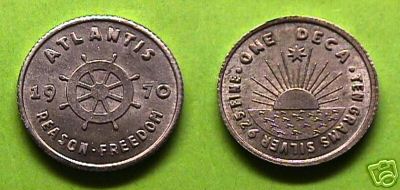
Hacia finales de los 60, un empresario de Nueva York llamado Werner Stiefel empezó a reunir gente con la idea de construir un refugio libertario flotante en el Caribe. Consiguieron construir un barco/plataforma y, con grandes dificultades, anclarlo cerca de las Bahamas. El barco se hundió en una tormenta.
Pero siguió sin rendirse y, poco después, ya estaba dragando arena para construir una isla sobre un arrecife cerca de Haití, con la suerte de que en ese arrecife solían encallar galeones españoles cargados de plata. Mala suerte, pues el gobierno de Haití se enteró y se interesó por la recuperación de la plata, enviando barcos de guerra para expulsar a aquellas extrañas personas.
El siguiente intento consistió en remolcar una plataforma petrolífera hasta los bancos de arena Misteriosa, a medio camino entre Cuba y Honduras. También la destruyó una tormenta.
Al final compró una isla en Belize con la intención de negociar con el gobierno un estatus especial. La burocracia era tan asfixiante que decidió vender la isla y retirarse, ya avanzado en edad. Murió el 8 de junio de 2006 a los 85 años de edad.
- - - - - - - - - -
Towards the end of the 60's, a New York entrepreneur called Werner Stiefel started gathering people with the idea of building a libertarian floating heaven in the Caribbean. They managed to build a ship/platform and, with great difficulty, anchored it near the Bahamas. It sank in a storm.
But he persevered and, soon after, he was dredging sand to build an island over a reef near Haiti, with the luck that Spanish galleons loaded with silver used to run aground there. Bad luck, as the Haiti government noticed and got interested in the silver salvage, sending gunboats to kick those strange individuals.
The next attempt consisted in towing an oil platform to the Misteriosa banks, halfway between Cuba and Honduras. Also destroyed in a storm.
At the end he bought an island in Belize with the intention of negotiating with the government for a special status. Bureaucracy was so overwhelming that he decided to sell the island and retire, old in age he was. Died on 8th June 2006 at 85.
Republic of Minerva - The Pacific Libertarian War?
Otro empresario estadounidense, Michael Oliver, creó una sociedad con la intención de levantar una isla sobre un arrecife del Pacífico. Así que en 1972 cargó barcos con arena en Sidney y se dirigió al arrecife de Minerva, muy lejos de las jurisdicciones vecinas (Fiji, Nueva Zelanda, Tonga), y empezó a echar la arena. En poco tiempo hubo suficiente espacio para construir una pequeña torre e izar la bandera. Los felices colonos siguieron echando arena hasta que el rey gordo de Tonga, que se había enterado al recibir una carta de declaración de independencia, marchó hacia Minerva con parte del ejército, prisioneros-esclavos, y una banda de música. Expulsaron a Michael Olivier y los suyos y reclamaron Minerva para el reino de Tonga.
En 1973, aprovechando la independencia de las Bahamas, Michael Oliver y su Phoenix Foundation apoyaron a un grupo de la isla de Abaco que quería su propia independencia, parece que por motivos racistas. Llegaron a introducir armas en la isla y preparar una revolución armada, pero el gobierno de las Bahamas abortó la acción y la isla ahora forma parte del archipiélago.
Ya en 1980, durante la independencia de Vanuatu, la Phoenix Foundation apoyó un movimiento rebelde también con la intención de proclamar una república libertaria, con apoyo de ingleses y franceses. Aunque llegaron a controlar varias islas del norte durante meses, el movimiento fracasó en parte por la intervención de Papua Nueva Guinea, que envió un batallón de soldados a sofocar la revuelta.
- - - - - - - - - -
Another entrepreneur, Michael Oliver, created a society with the intention of raising an island over a Pacific reef. So in 1972 he loaded ships with sand at Sidney and headed to the Minerva reef, far away from neighbor jurisdictions (Fiji, New Zealand, Tonga), and started to pour the sand. In short there was enough space to build a small tower and raise the flag. The happy colonist kept pouring sand until the fat king of Tonga, that knew the affair after receiving an independence declaration letter, marched towards Minerva with part of the army, slave-prisoners, and a brass music band. They expelled Michael Olivier and his partners and reclaimed Minerva for the kingdom of Tonga.In 1973, taking advantage of the Bahamas independence, Michael Oliver and his Phoenix Foundation backed a group from the Abaco island that wanted their own independence, seemingly because of racist motives. They got to introducing weapons in the island and to prepare an armed revolution, but the Bahamas government aborted the action and the island is now part of the archipelago.
Later in 1980, during the Vanuatu independence, the Phoenix Foundation backed a rebel movement also with the intention of proclaiming a libertarian republic, with support from English and French individuals. While they got to control several northern islands during months, the movement failed in part because of the Papua New Guinea intervention, that sent a battalion to suffocate the revolt.
Laissez Faire City - Randians in Perú

En los años 90, un grupo de empresarios Randianos de diversos países empezó a buscar por el mundo un lugar en el que establecerse. Fundaron el Laissez Faire City International Trust y contrataron a un ruso (Mikhail Larguine) para que guiara el proyecto.
Llegaron a un acuerdo con el gobierno de Perú para que les cediera un espacio de 300km2, pero con el tiempo Alberto Fujimori perdió interés por la idea, el proyecto se aguó y muchos abandonaron. Los que quedaron intentaron montar una ciudad utópica en la red, que nunca llegó a despegar.
- - - - - - - - - -
In the 90's, a group of Randian entrepreneurs from diverse countries started searching for a place to settle around the world. They founded the Laisssez Faire City International Trust and hired a russian (Mikhail Larguine) to guide the project.
They got to an agreement with Peru government to lend them a 100sqm space, but with time Alberto Fujimori lost interest in the idea, the project watered and a lot of people abandoned. The ones who remained tried to start an utopian city on the web, that never took off.
Principality of Hutt River - Peaceful Secession
Un pedazo de tierra en Australia Occidental que consiguió legalmente la independencia en 1972. Aunque el estatus aún no está claro, son de facto independientes y no pagan impuestos ni responden a la seguridad social australiana. Toda la información muy bien resumida en la wiki.
- - - - - - - - - -
A piece of land in Western Australia that legally acquired independence in 1972. While the status is still controversial, they are de facto independent and do not pay taxes, neither are tied to the Australian social security systems. All the info is very well gathered in the wiki.
Charter Cities Madagascar - The Benevolent Dictator

El economista Paul Romer ya había estado promocionando su idea de las Ciudades Charter antes de intentarlo en Honduras. En 2008 sus ideas llegaron a oídos del gobierno de Madagascar, que estaba ansioso por mejorar su credibilidad para atraer inversiones extranjeras. Después de varias reuniones, consiguió hablar con el entonces presidente Ravalomanana, que le propuso crear no una, si no dos Ciudades Charter, una en cada extremo de la isla. A principios de 2009 la gente empezó a revelarse en contra de la administración de tierras por parte de compañías extranjeras (otro de las ideas de desarrollo de Ravalomanana) y derrocaron al presidente, arrastrando las Charter Cities con él.
- - - - - - - - - -
The economist Paul Romer had already been promoting his Charter Cities idea before trying in Honduras. In 2008 his ideas arrived to the Madagascar Government ears, which was anxious for improving its credibility to attract foreigner investments. After several meetings, he managed to talk with the then president Ravalomanana, that proposed him to create not one but two Charter Cities, one in each end of the island. At the start of 2009 people started rebelling against land administration by foreigner companies (another of the development ideas of Ravalomanana) and overthrew the president, trashing the Charter Cities with him.
Lazika - The Black Sea Leap
En 2011, el presidente de Georgia Mikheil Saakashvili anunció la construcción de una nueva ciudad en la costa del Mar Negro siguiendo la idea de las Zonas LEAP del economista Mark Klugmann. El presidente parece que se entusiasmó demasiado, hasta niveles casi enfermizos. Se llegaron a construir varios hoteles y un juzgado. El cambio de gobierno en 2012 tumbó completamente el proyecto, pero sin duda habría sido un proyecto interesante.
- - - - - - - - - -
In 2011, the Georgia president Mikheil Saakashvili announced the construction of a new city in the Black Sea coast following the idea of the LEAP Zones from the economist Mark Klugmann. The president seems to have overexcited about the idea, to almost-ill levels. They got to construct a few hotels and a courthouse. The change in government in 2012 knocked down the project completely, but no doubt it would have been an interesting development.
Y hasta aquí llego. Si alguien tiene idea de más proyectos de este tipo que hayan fallado, dejadlo en comentarios y lo añadiré a la lista.
- - - - - - - - - -
Here is what I know. If someone has any idea of other projects of this kind that have failed, drop it in the comments and I'll expand the list.
sábado, 17 de agosto de 2013
Startup Non-Cities

Leer en castellano
I've been reading a lot on Startup Cities lately, specially since the SCI weekend. Probably that hasn't been enough.
There have been a lot of articles, opinions and discussions on how to provide all the services a Startup City would need to make it viable, livable and attracting for whose could inhabit it. And it's lovely to read and comment on innovative and disrupting ideas about city government or services provision.
But I haven't read much on what are those cities actually going to service to, or how is that non-services part going to work. I mean, in developed economies about 75% of the activity is on services. But I can't think of a single city for and by the poor that has started service-oriented, mostly due to the massive monetary and education investments needed for that.
When looking around, specially in Asia, successful cities like Singapore and Hong Kong started not only as trade hubs but as manufacturing powerhouses, because that's what the thousands of uneducated inhabitants they got could do efficiently. In places like Dubai, uneducated migrants were employed in construction projects too expensive for a startup approach.
For most of those successful cities, it was foreign investment that built the factories and skyscrapers. That left most of the uneducated workers waiting for their children to get better education so they could replace foreigners in generating value. It takes at least a generation for poor native inhabitants to develop into prosperous middle classes (or better) following that model, which is not that bad at all.
But, for a Startup City? Of course some or a lot of foreign investment is needed, but today the world is becoming flatter and flatter (economically): a small workshop in Guangzhou can post its wares in alibaba, get in contact through internet with exporters, transport companies and distributors in the target country; even get straight to their consumers oceans away without moving from the office. A friend of mine imports wares to Spain from a Pakistani guy who he has never meet in person, through a logistical chain he only knows by name, price and delivery place. Actually, his biggest concern is local administration bureaucrazy.
What I'm left wondering is how startup industry and startup finances could work. I can think of Yunnus Bank, but we might need a different approach for a place like Honduras ZEDEs, or other possible Startup Cities. I'd really love to see some more discussion about startup economy outside of services.
- - - - - - - - - - - - - - - - - - -

Han aparecido un montón de artículos, opiniones y discusiones sobre la provisión de servicios que una Ciudad Startup requeriría para hacerla viable, habitable y atractiva. Me encanta leer y comentar ideas innovadoras y disruptivas sobre el gobierno de una ciudad o la provisión de servicios.
Pero no he leído mucho sobre a qué van a servir exactamente esas ciudades, o cómo va a funcionar la parte no basada en los servicios. Quiero decir, en las economías desarrolladas alrededor del 75% de la actividad se centra en los servicios. Pero no se me ocurre ni una ciudad por y para los pobres que haya empezado orientada a servicios, sobre todo por la masiva inversión monetaria y educativa necesaria para eso.
Buscando, especialmente en Asia, ciudades exitosas como Singapur u Hong Kong empezaron no solo como núcleos de comercio sino además como centros manufactureros, porque eso es lo que los miles de habitantes sin educación que tenían podían hacer eficientemente. En lugares como Dubai, los emigrantes sin educación fueron empleados en proyectos de construcción demasiado caros para una aproximación startup.
Para la mayoría de esas prósperas ciudades, fue la inversión extranjera la que construyó las fábricas y los rascacielos. La mayoría de los trabajadores sin educación quedaron a la espectativa de que sus hijos consiguieran una educación mejor que les permitiera reemplazar a los extranjeros en la generación de valor. Cuesta al menos una generación para que los habitantes nativos pobres se transformen en prósperas clases medias (o mejores) siguiendo ese modelo, lo que no está nada mal tampoco.
Pero, ¿Para una ciudad Startup? Por supuesto que algo de inversión extranjera hace falta, pero hoy en día el mundo se está volviendo cada vez más plano (económicamente). Un pequeño taller en Guangzhou puede publicar sus mercancías en alibaba, contactar a través de internet con exportadores, compañías de transporte y distribuidores en el país objetivo; incluso llegar directamente hasta los consumidores a océanos de distancia sin moverse de la oficina. Un amigo mino importa mercancías a España de un chico paquistaní al que nunca ha conocido en persona, a través de una cadena logística de la que solo sabe el nombre, el precio y el lugar de entrega. Al final, su mayor preocupación es la burocracia administrativa local.
Lo que me pregunto es cómo la industria startup y las finanzas startup podrían funcionar. Puedo pensar en el Banco de Yunnus, pero tal vez haga falta una aproximación diferente para un lugar como las ZEDEs de Honduras, u otras posibles Ciudades Startup. Me encantaría ver algo más de discussión sobre economía startup más allá de los servicios.
No me malinterpretéis. Nocreo que haga falta planearlo, o ni siquiera preverlo. Deja a un puñado de gente en el ambiente apropiado y encontrarán las soluciones adecuadas, sin importar lo pobres que sean o la poca educación que tengan. Pero la cosa parece estar tan cerca que deberíamos empezar a encontrar esas soluciones.
lunes, 5 de agosto de 2013
sábado, 3 de agosto de 2013
Right of secession for Free Cities

Read in English
Las constituciones jugaron un papel importantísimo durante el s.XIX, cuando la mayoría nacieron, protegiendo las nuevas instituciones liberales de los retrocesos reaccionarios. Así, se aseguraban una serie de derechos para los ciudadanos que ni el rey ni el gobierno podían ignorar.
Suscribirse a:
Entradas (Atom)